Home · Singing sands
A bass note in the desert
Singing sands, a pipe organ, and a 13th-century description that was not spirits
At Eureka Dunes, when the sand is completely dry, an avalanche can sound like a bass note of a pipe organ or the distant drone of an airplane. The Park Service says why this happens is not fully understood. Cambridge researchers quote Marco Polo, then give the work to physics.
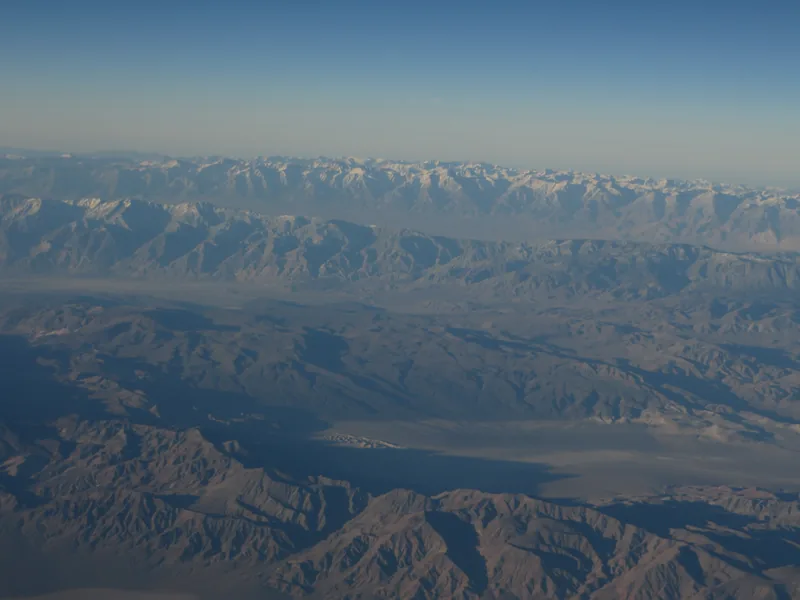
The photograph is of Eureka Dunes in Death Valley National Park, taken in November 2014. The National Park Service says these dunes “rise suddenly more than 680 feet above the dry lakebed at their western base,” covering an area “only 3 miles long and 1 mile wide.” They lie in Eureka Valley, “an enclosed basin at 3000 foot elevation located northwest of Death Valley,” and “are the tallest sand dunes in California, possibly the tallest in all of North America.” [source]
The singing is fussy. “When the sand is extremely dry, the sliding sand (usually down the steepest face of the highest dune) will sometimes make a sound like a bass note of a pipe organ or the distant drone of an airplane.” And then the condition that ruins the concert: “If the dune is at all damp (even though it may not feel so to the touch) no sound will be made.” The Park Service is frank about the gap in the explanation. “Why this occurs is not fully understood, but may have something to do with the smooth texture of the sand grains and the friction of those grains sliding against each other.” [source]
Marco Polo, and a physical account
The University of Cambridge, on a page about what makes a sand dune sing, quotes Marco Polo writing in the 13th century. The sands, he wrote, “at times fill the air with the sounds of all kinds of musical instruments, and also of drums and the clash of arms.” Cambridge treats that as a historical description, not as a report of spirits in the desert. “The low, loud rumbles coming from the dunes were not the work of spirits. They were the work of physics.” [source]
The physical conditions, as Cambridge sets them out, are as particular as the Park Service’s dry-or-nothing rule. Avalanches “create vibrations that can be heard for miles around,” but “it can’t be too humid, and the grains of sand need to be just the right size and contain silica.” Nathalie Vriend, quoted there, says “a sand dune may look like a monolithic mass of sand, but there are multiple layers and structures within it.” [source]
This desk does not turn those two official accounts into one blended mechanism, or invent a frequency for the Eureka “bass note.” The Park Service still says the cause is not fully understood. Cambridge describes the physics of singing dunes in general, including humidity, grain size and silica. Both can be true on the same shelf. [source] [source]
Enjoyed this desk on icequakes, singing dunes, and rooms quieter than quiet?
No pop-ups. No intrusive advertising. Just interesting stuff. A little support helps the next ReallyByte site get built.