Credits
Every photograph on this site
Licences were checked on each Wikimedia Commons file page on 18 November 2026. CC BY stills are used on the website and credited; they are not placed in the typographic PDFs. CC BY-SA stills are used on the website only, and are not placed in the downloadable fact sheets.
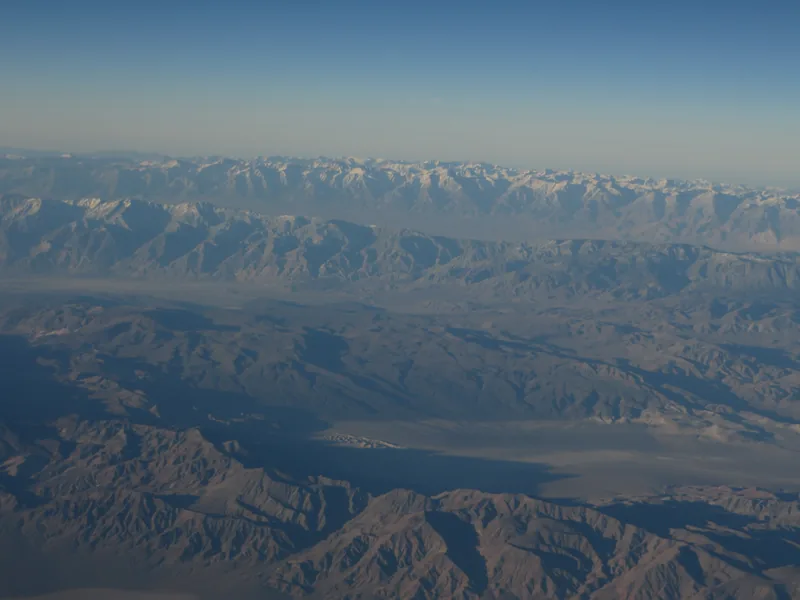
The Eureka Dunes in Death Valley National Park, photographed by Ken Lund on 3 November 2014. The National Park Service says that when the sand is completely dry, an avalanche down the steepest face can produce a sound like a bass note of a pipe organ, or the distant drone of an airplane, and that why this occurs is not fully understood. CC BY-SA 2.0, used on the website only, and not placed in the typographic fact sheets. Photo: Ken Lund · CC BY-SA 2.0 · Ken Lund 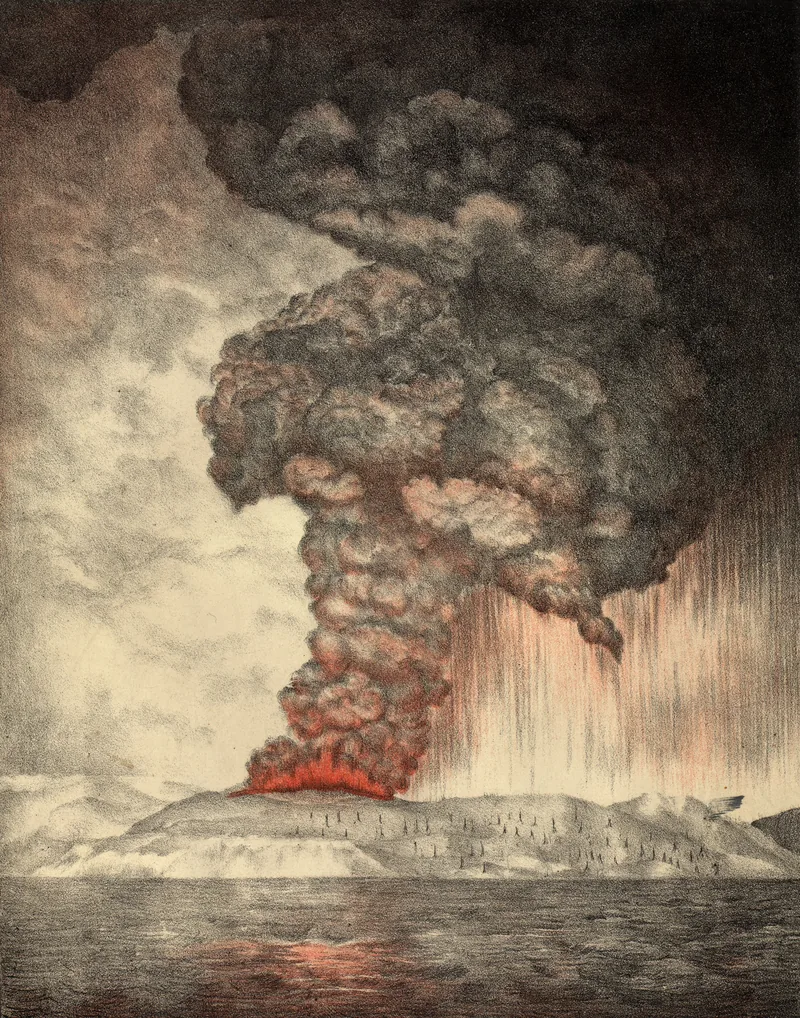
An 1888 lithograph of the 1883 eruption of Krakatoa, by Parker & Coward in Britain. Public domain. Lithograph: Parker & Coward · Public domain · Parker & Coward, 1888 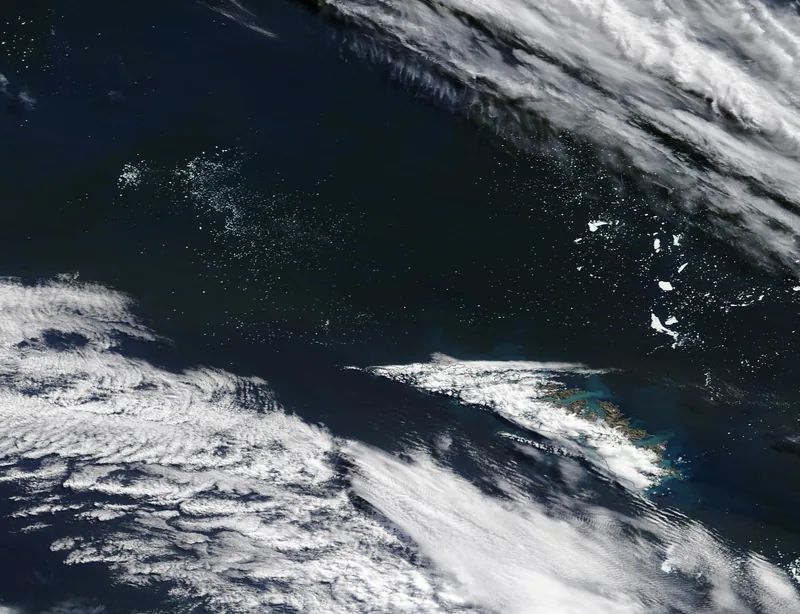
Bits and pieces of iceberg A68 around South Georgia Island, in a true-colour image acquired by NASA’s Terra MODIS instrument and published for 16 March 2021. This is not a picture of the 1997 Bloop. NOAA’s PMEL later tracked icequakes from a different iceberg, A53a, as it disintegrated near South Georgia Island in early 2008. Public domain. Photo: MODIS Land Rapid Response Team, NASA GSFC · Public domain · NASA GSFC / MODIS 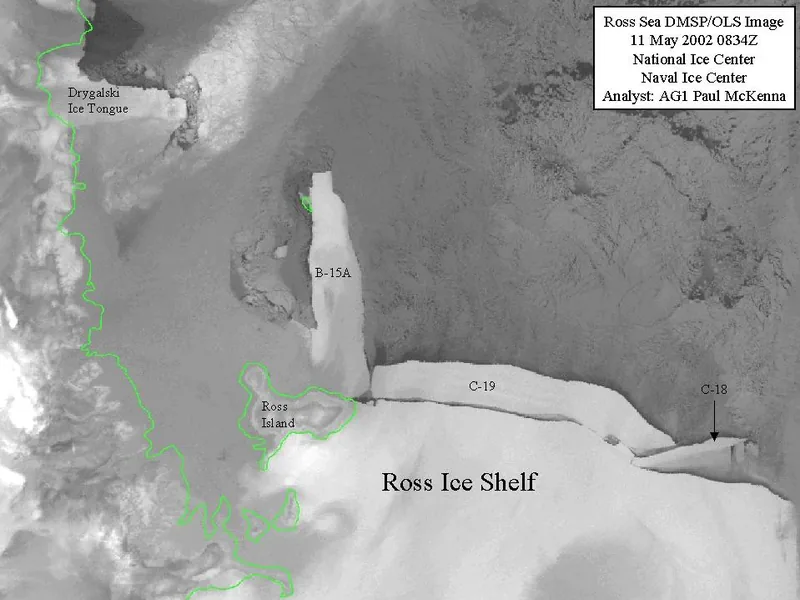
Iceberg C-19 calving from the Ross Ice Shelf on 11 March 2002, in a U.S. NOAA / Navy image from the Defense Meteorological Satellite Program. This is an official picture of ice breaking away from an Antarctic shelf, not a picture of the 1997 Bloop. Public domain. Photo: NOAA / U.S. Navy · Public domain · NOAA / U.S. Navy 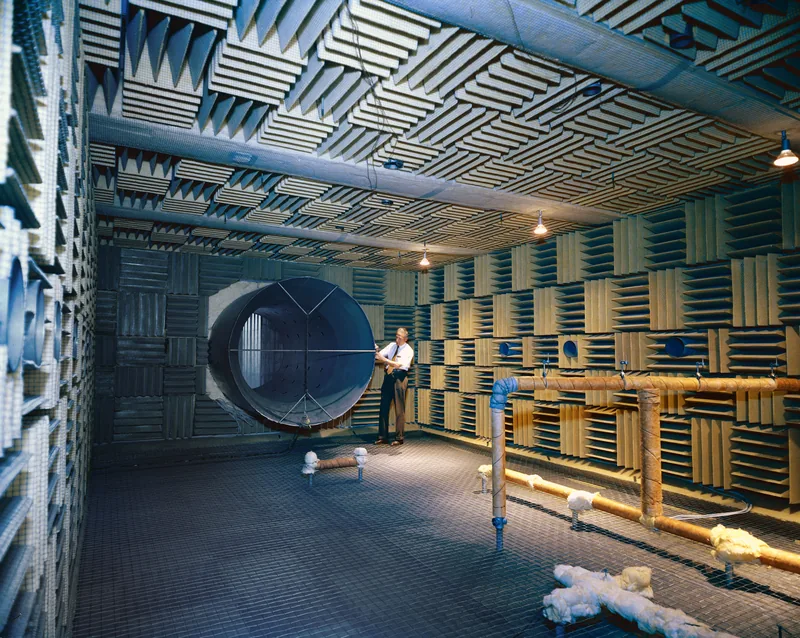
The aerodynamic noise facility at NASA’s Jet Propulsion Laboratory, also called an anechoic chamber, used to study noise from supersonic and subsonic jets in the early 1970s. Photographed 30 August 1971. Public domain. Photo: NASA / JPL · Public domain · NASA / JPL 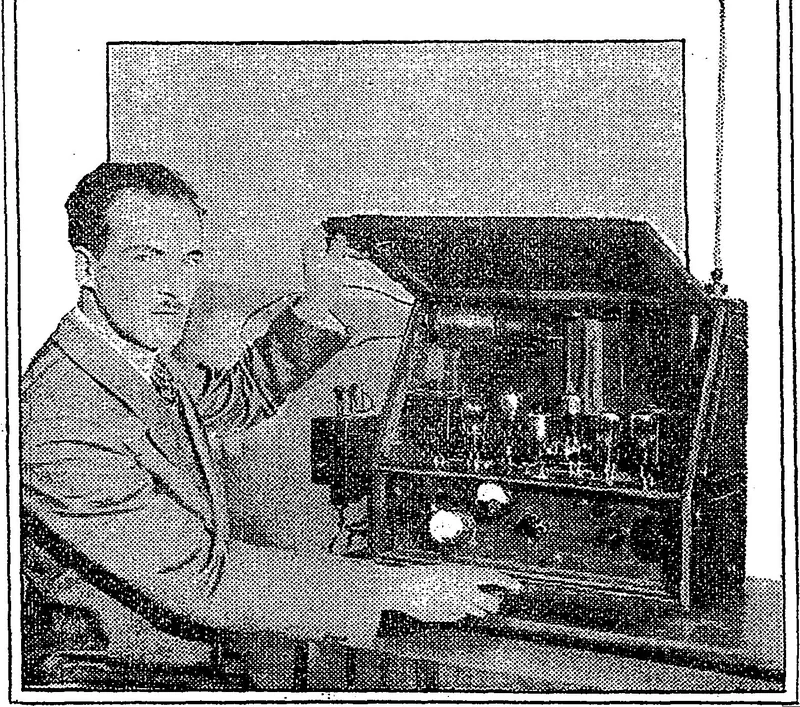
Léon Theremin with his etherphone, in a New York Times photograph published 29 January 1928. Smithsonian Magazine says he brought the instrument to the United States in December 1927 and received a U.S. patent in February 1928. Public domain. Photo: The New York Times · Public domain · The New York Times, 29 January 1928 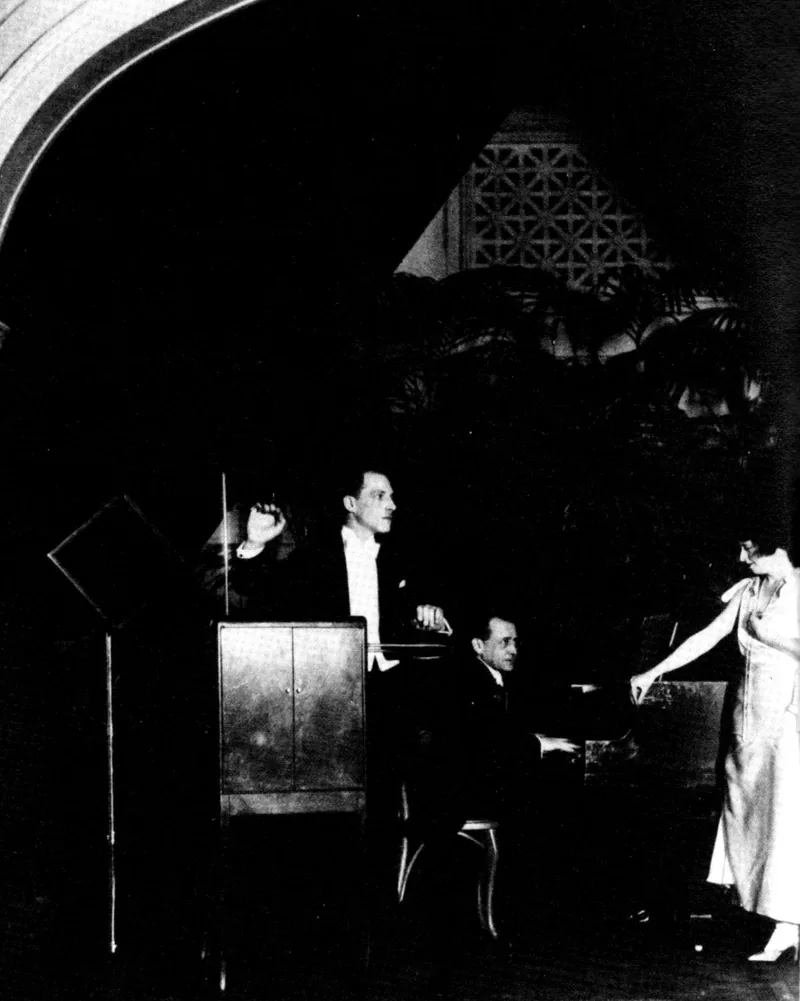
Léon Theremin performing a trio for theremin, voice and piano, around 1924. Public domain. Photo: unknown · Public domain · Unknown photographer 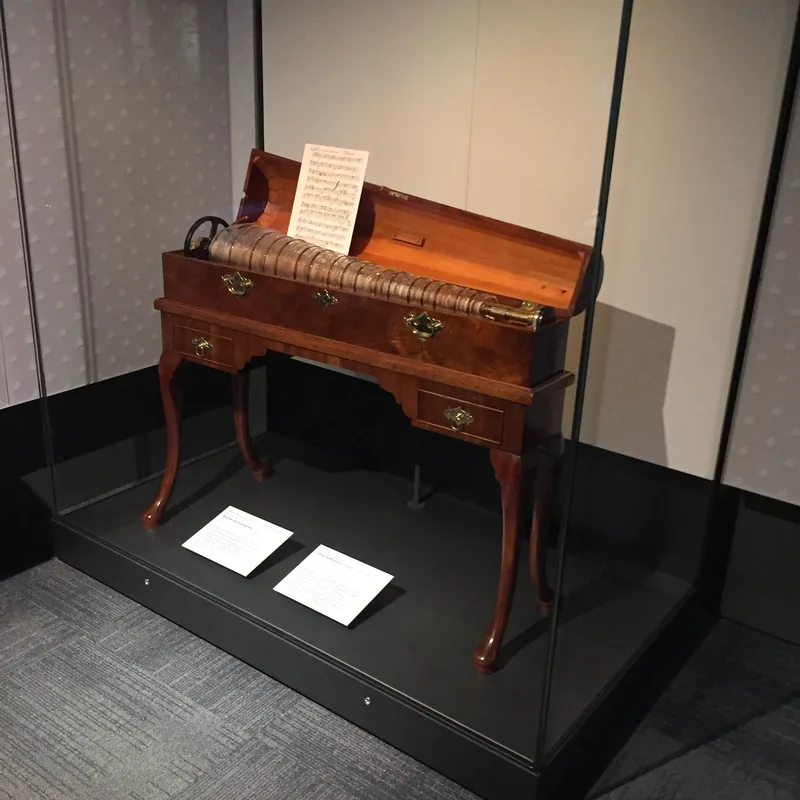
A replica of a glass armonica made by Charles James in 1761-1762, photographed by David Hilowitz on 21 November 2015 at the Benjamin Franklin Museum in Philadelphia. The Franklin Institute says Benjamin Franklin completed his glass armonica in 1761. This photograph is of a replica, not of Franklin’s own instrument. CC BY 2.0. Photo: David Hilowitz · CC BY 2.0 · David Hilowitz 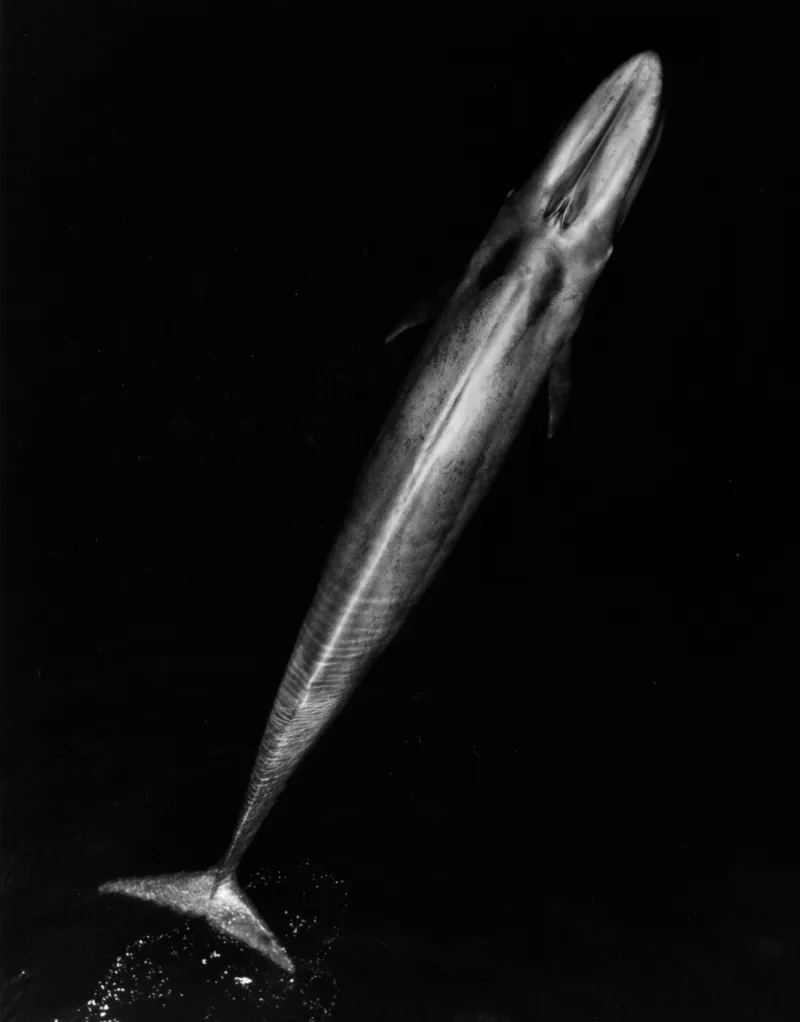
A blue whale, in a NOAA Fisheries photograph. NOAA says the blue whale is the largest animal on Earth, and among the loudest, emitting pulses, groans and moans that, in the right oceanographic conditions, can be heard by other whales up to 1,000 miles away. Public domain. Photo: NOAA Fisheries · Public domain · NOAA Fisheries 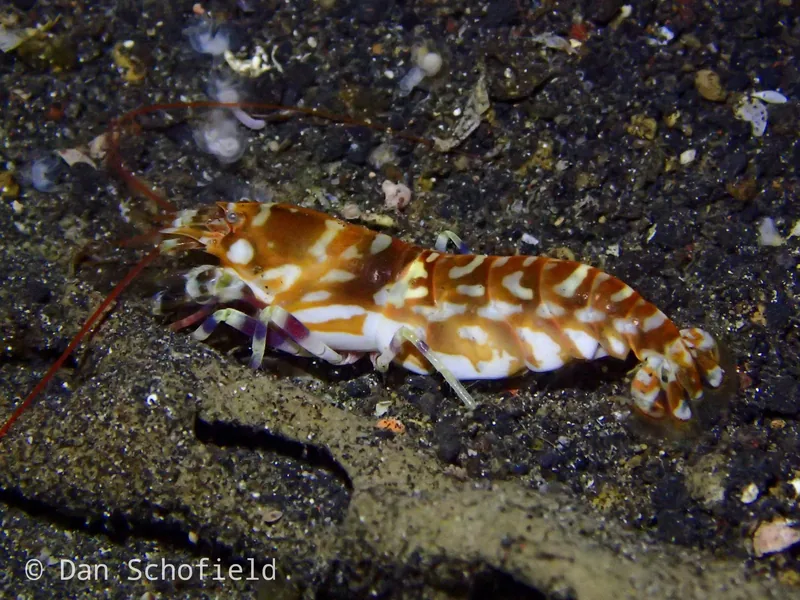
A tiger snapping shrimp (Alpheus bellulus), photographed by Dan Schofield on 13 November 2019. A NOAA Office of National Marine Sanctuaries page says a snapping shrimp’s claw produces a bubble which bursts and makes a loud snap, at 183-210 decibels, making them some of the loudest sound producers in the ocean. CC BY 4.0. Photo: Dan Schofield · CC BY 4.0 · Dan Schofield 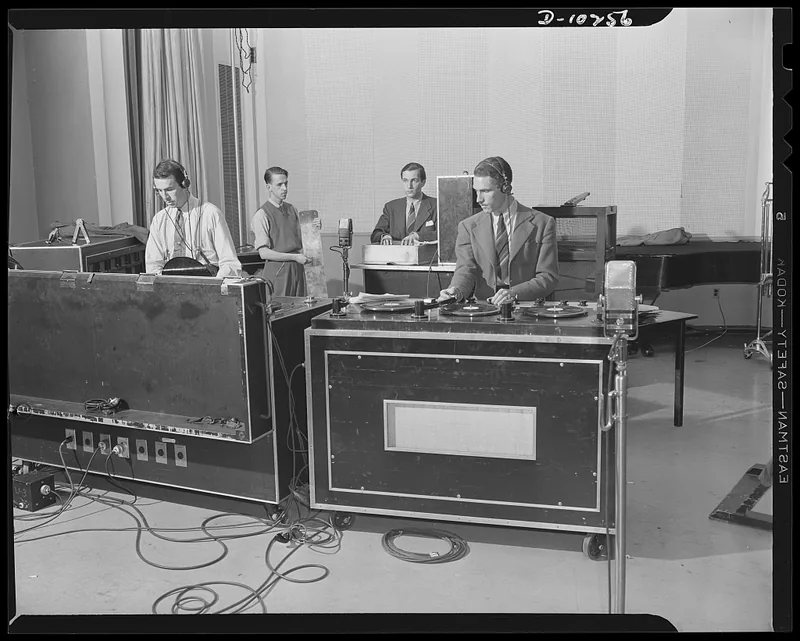
“Three Thirds of the Nation. Showing sound effect set-up on stage for the War Production Board (WPB) radio show ‘Steel,’ presented May 5 over the Blue Netwoerk. Left to right: Bill Nugent, Carrol Fraser, Jack Schnell and Carl Schoele.” Photographed by David Bransby in 1942. The spelling “Netwoerk” is on the Library of Congress record and is left as written. The original scan used here is 1,024 pixels wide and is not upscaled. Public domain. Photo: David Bransby · Public domain · David Bransby / Library of Congress
Enjoyed this desk on icequakes, singing dunes, and rooms quieter than quiet?
No pop-ups. No intrusive advertising. Just interesting stuff. A little support helps the next ReallyByte site get built.