sounds.im
Strange sounds, official stories, and a few that still will not sit still
A desk about icequakes mistaken for sea monsters, a volcano heard thousands of kilometres away, sand that sings, a hum without one agreed cause, rooms built for silence, and a film scream that became folk art. Nothing here is invented, and a legend is labelled as a legend.
This used to be an artist discovery network. It is not that any more. sounds.im is now a ReallyByte site about strange, surprising and fascinating sounds: the kind of story you find, linger on, share, and come back to. The old artist pages, application forms and discount offers are gone. If you arrive on one of those old addresses, you will be sent to a page that still belongs here.
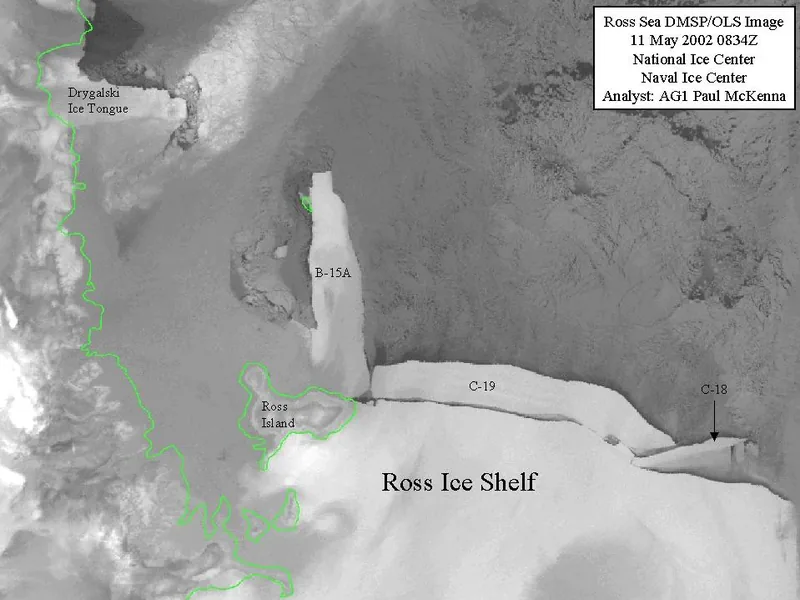
Start with a noise from the southern Pacific. In 1997, researchers listening for underwater volcanic activity recorded “a strange, powerful, and extremely loud sound” on hydrophones more than 3,219 kilometres apart. Theories, NOAA later listed, included military exercises, ship engines, winches, giant squids, whales, “or a some sea creature unknown to science.” The grammar is NOAA’s, and so is the later answer: in 2005, scientists identified the Bloop as an icequake, an iceberg cracking and breaking away from an Antarctic glacier. [source]
The signature desk
What made that sound?
Six official stories, kept separate: an icequake once mistaken for a monster, a volcano heard thousands of kilometres away, sand that sings, a hum without one agreed cause, rooms built for silence, and animals among the loudest on Earth.
An icequake, not a sea monster
The Bloop
In 1997, researchers listening for underwater volcanic activity in the southern Pacific recorded a strange, powerful, and extremely loud sound, picked up on hydrophones more than 3,219 kilometres apart. NOAA’s Ocean Service says scientists identified the source in 2005: an icequake, an iceberg cracking and breaking away from an Antarctic glacier. The sea-creature theories were theories, listed by NOAA, not findings. [source]
The loudest official distances
Krakatoa, 27 August 1883
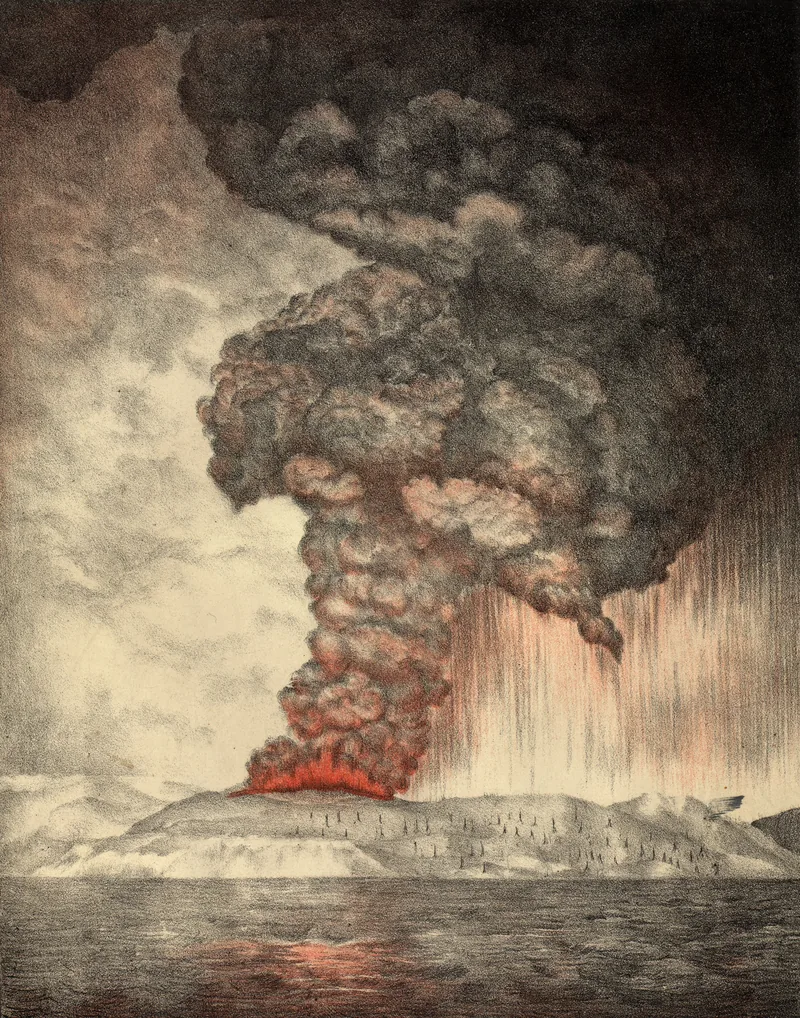
A USGS volcano watch says inhabitants of Rodriguez Island heard what they thought were heavy guns, from explosions nearly 5,000 km (3,000 miles) to the northeast, “the loudest and farthest traveled sound in recorded history.” A NOAA NCEI page says the final explosion was heard across more than 10% of Earth’s surface, with reports from Australia and Mauritius more than 2,800 miles (4,600 kilometres) away. Those official distances are not averaged here. [source] [source]
Not spirits in the desert
Singing sand
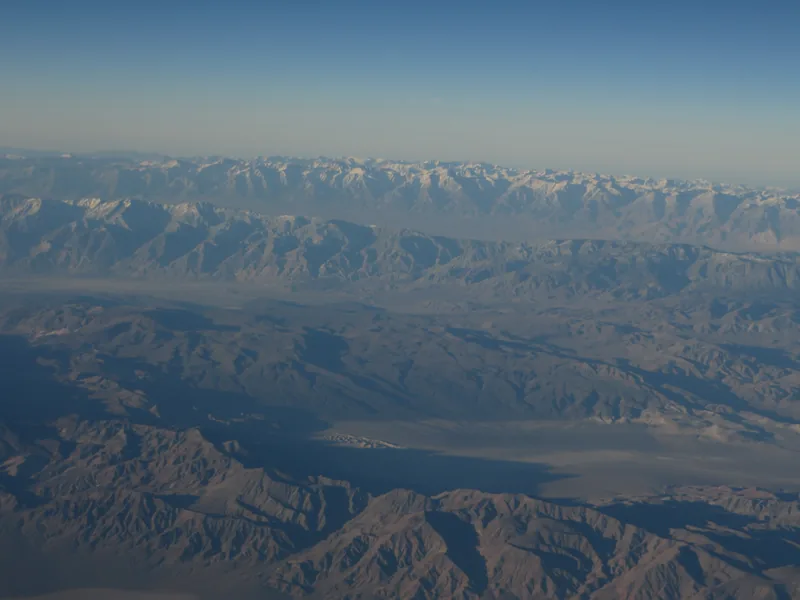
The National Park Service says that at Eureka Dunes, when the sand is completely dry, an avalanche can sound like a bass note of a pipe organ or the distant drone of an airplane, and that why this occurs is not fully understood. Cambridge researchers quote Marco Polo’s 13th-century description of instruments, drums and the clash of arms, then say the rumbles were the work of physics, not spirits. [source] [source]
Two investigations, not one cause
The Hum
A 1993 investigation in Taos, New Mexico, requested after congressional action, monitored sound, seismic activity and electromagnetic fields for a week. James P. Cowan’s 2008 ICBEN paper, drawing on that study’s unpublished documentation, says 161 of 8,000 surveyed residents reported the hum, the results were inconclusive, and the only unusual instrument reading was an elevated electromagnetic field related to local power lines. A 2003 Kokomo study, described in the same paper, measured 10 Hz and 36 Hz tones in some homes. Those are two stories, not a single official cause. [source]
Who is the quietest?
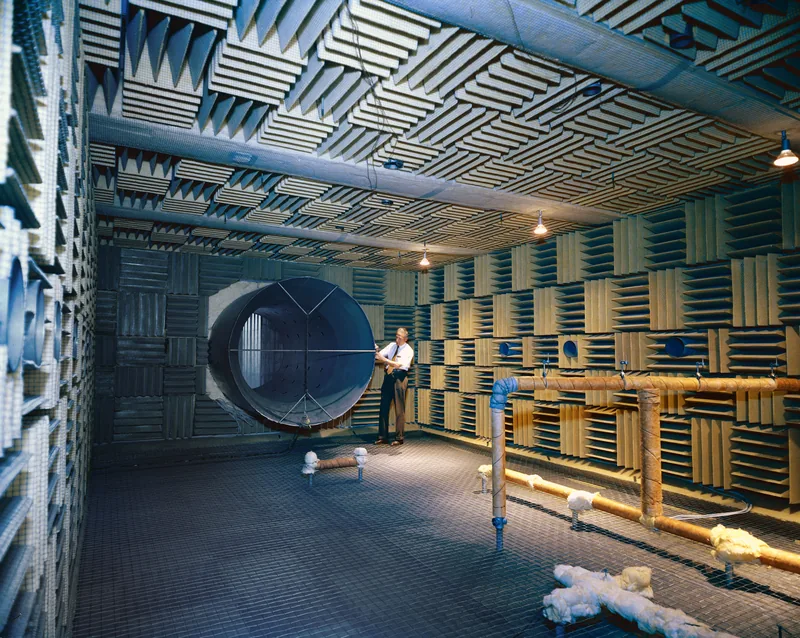
Rooms built for silence
Orfield Laboratories, on its home page, still calls itself “The Quietest Place on Earth.” A Guinness World Records report dated 2 October 2015 gave a new title to a Microsoft anechoic chamber in Redmond, with an average background noise reading of -20.35 dBA, and test results written as “20.6 dBA and -20.1 dBA.” The earlier Guinness mark, the same page says, was -13 dBA at Orfield in October 2012. This desk keeps the laboratory’s phrase, the Guinness figures, and the missing minus sign, all as written. [source] [source]
Among the loudest
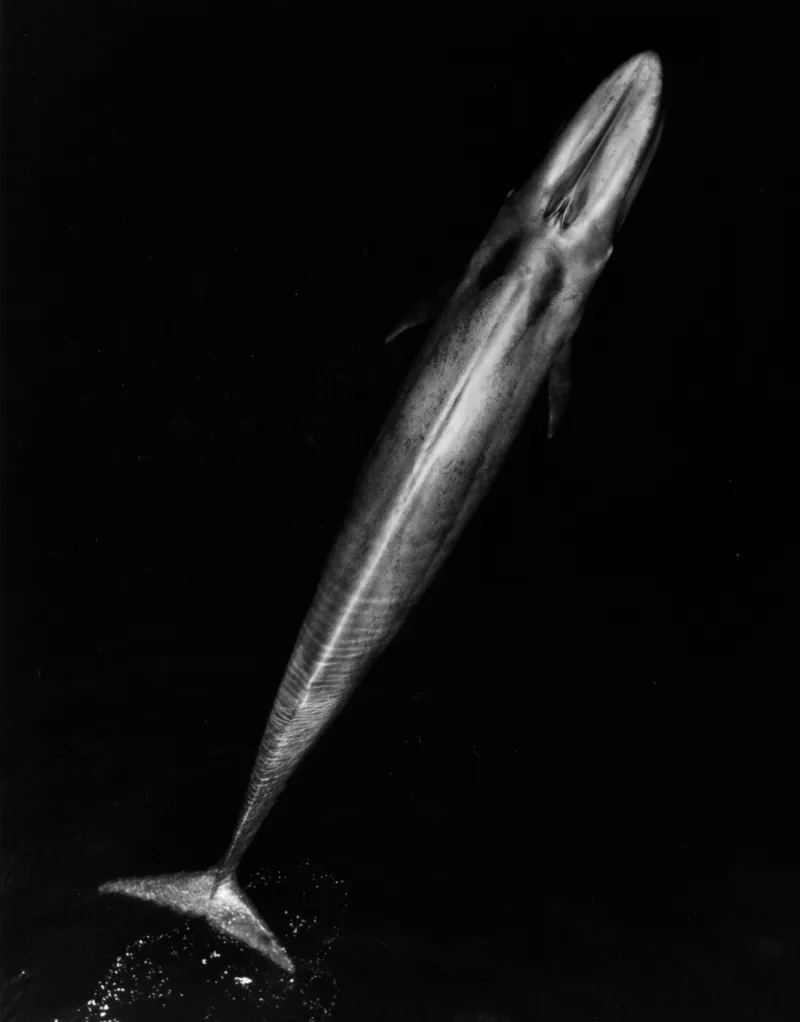
Whales and shrimp, unblended
NOAA Fisheries says blue whales are among the loudest animals on the planet, and that in the right conditions their pulses, groans and moans can be heard by other whales up to 1,000 miles away. That page does not give a decibel figure. A NOAA sanctuaries page gives snapping-shrimp snaps at 183-210 decibels, and calls them some of the loudest sound producers in the ocean. Air and water figures are not treated as one scale here. [source] [source]
A volcano heard almost around the world
On 27 August 1883, the USGS says, people on Rodriguez Island heard what they took for heavy guns, from explosions at Krakatau nearly 5,000 km (3,000 miles) to the northeast — “the loudest and farthest traveled sound in recorded history.” A NOAA NCEI page gives a different official distance: reports from Australia and Mauritius more than 2,800 miles (4,600 kilometres) away, and a sound heard across more than 10% of Earth’s surface. This desk keeps both wordings, and does not average them. [source] [source]
The Royal Society, writing in 2024 about the committee it formed in 1883, gives an “estimated sound intensity of 180dB,” audible up to 5,000 kilometres away, a gasometer spike of over 8.5 kilopascals in Batavia 160 km from the blast, and ruptured eardrums on the RMS Norham Castle. The 180 dB stays labelled as an estimate. [source]
Sand that sings, and rooms that try not to
At Eureka Dunes in Death Valley National Park, when the sand is completely dry, an avalanche can sound “like a bass note of a pipe organ or the distant drone of an airplane.” If the dune is at all damp, the Park Service says, no sound will be made, and why the singing happens “is not fully understood.” Cambridge researchers quote Marco Polo’s 13th-century description of instruments, drums and the clash of arms, then say the rumbles were the work of physics, not spirits. [source] [source]
Silence has a record book of its own. Orfield Laboratories, on its home page, still calls itself “The Quietest Place on Earth.” Guinness World Records, on 2 October 2015, gave a new title to a Microsoft anechoic chamber in Redmond, with an average background noise of -20.35 dBA, and test results written as “20.6 dBA and -20.1 dBA.” The earlier mark, the same page says, was -13 dBA at Orfield in October 2012. This site quotes the laboratory, quotes Guinness, and leaves the missing minus sign alone. [source] [source]
What else is on the desk
- The Bloop — an icequake, not a sea monster, with distances that belong to different NOAA pages.
- The sound of Krakatoa — official distances, an estimated 180 dB, and pressure waves that travelled the globe.
- Singing sands — Eureka Dunes, Marco Polo, and physics instead of spirits.
- The Hum — Taos in 1993 and Kokomo in 2003, kept as two investigations.
- Foley and old radio — Jack Foley on Stage 10, and the record libraries of the golden age of radio.
- Strange instruments — Franklin’s glass armonica, and Léon Theremin’s hands-in-the-air invention.
- The loudest animals — blue whales without an invented decibel, and snapping shrimp with NOAA’s 183-210.
- The quietest rooms — Orfield’s phrase, Guinness figures, and a typo left as written.
- The Wilhelm scream — Ben Burtt’s own account, without names this desk has not re-checked.
There are also sourced facts, myths versus facts, a quiz, a timeline, and three free typographic fact sheets.
Enjoyed this desk on icequakes, singing dunes, and rooms quieter than quiet?
No pop-ups. No intrusive advertising. Just interesting stuff. A little support helps the next ReallyByte site get built.